01 March 2009

In which I think of new forms of exhibits

This week in museology we've been reading about exhibits - who is listening and looking (students? the upper class? the 'public'?), who is talking (curators? designers? educators?), the problems with interpretation, the concerns with 'blockbusters', the ethical questions that need to be thought through. "Museums are not museums without exhibitions", writes Kathleen McLean, and they are "the soul of a museum experience". I thought I would share with you, readers, a very interesting exhibit I saw recently: the Met's The Philippe de Montebello Years: Curators Celebrate Three Decades of Acquisitions.

This was a very strange exhibit for me, especially as a public history student. Traditionally exhibits are thought of as visually appealing, 3-D versions of an academic paper, in the way that there is a thesis, and objects are used to illustrate this idea. We are used to exhibits talking about one historical subject, perhaps two; but this exhibit was very different.

Philippe de Montebello was the director of the Met until his recent retirement. His 30+ year influence, as well as the respect given to him by his colleagues, is obvious. The show really is a celebration of his time at the museum, and it was well-advertised; the Met's Special Exhibition podcast had been doing shows about the objects featured in the exhibit for months.

This exhibit was not on one historical topic, nor did it centre on one historical era or country, and it didn't talk about a certain art movement. Th exhibit featured the Met's most important acquisitions over the past thirty years, most important being defined in this case as the most transformative to its collections. As the exhibit website describes, it is a celebration of the diversity of the museum's collection. Three hundred objects were placed in the gallery's largest exhibition space, and in it was created "an explosive kaleidoscope of works in various materials representing artistic traditions that range across the globe and across time".

The show was organized in a completely different way than a usual art gallery. The objects were organized solely by acquisition date, meaning that a visitor moved from an 18th century French dress, to a 4th century BC Egyptian figure, to a 14th century Burgundian deck of cards, to a 5th century Indian Buddha, to a Sienese medieval painting, to a picture of Marilyn Monroe. The artifacts spanned thousands of years, hundreds of countries (even Easter Island), and included everything from famous painters (Rembrandt, Picasso, van Gogh) to little-known 19th century photography, from clothing to quilts, from pistols to armour.

Walking through the exhibit was slightly overwhelming. I'd never seen an exhibit that literally centred around acquisitions and ignored any sort of thematic organization. But I, as well as my father who was with me, both agreed it was a new and wonderful way to see the objects. There was no attempt to relate the objects to one another; the accompanying text panels spoke only of the individual artifact. The exhibit let the visitors make their own connections between the objects, between styles, between countries, between eras. It also did a great job at illustrating the sheer size of a world-class art museum like the Met, whose collections mandate must be very long indeed.

While it might seem counterintuitive for curators to put together a large exhibit without a historical (or artistic) theme and which had no prescribed learned message for visitors, this sort of exhibit still worked. It let visitors see objects that had never been displayed together in the same room, allowing for new meanings to come out of the objects. It broke traditional museum rules and moved some of the interpretation from the curators to the visitors. Overall it celebrated the efforts of a single man, who helped the Met become one of the most important art museums in the world.

21 February 2009

In which I think back to historical novels

I am blatantly stealing Jenna's idea, so I hope she doesn't mind!

I too became interested in history through more popular means than my 'Integrated Studies' classes of grades seven and eight (and yes, for some reason geography and history were lumped together under that unappealing name). Something about fur-traders and the plaines d'Abraham just didn't peak my interest. But I read many historical novels for 'tweens' - or whatever we were called back then - and I thought I would share some of my favourites.


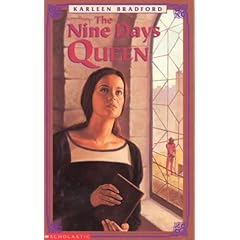
Karleen Bradford, The Nine Days Queen

I loved this book when I read it. It got me completely interested in Henry VIII and his wives. The book revolves around the short life of Jane Grey, whose mother was first cousin to Henry. When Henry's son, King Edward VI dies, a Protestant faction puts her unwillingly on the throne for nine days, until she is unceremoniously thrown in the Tower of London by the true queen, Mary I. Later she is beheaded. The fact that it was a true story made it such an exciting book, and it had everything: royalty, Renaissance England, murder, sex scandals. Young readers will be completely engrossed by the fact that Jane is only a few years older than them.


The Diary of Anne Frank

Though not a novel, this is a must-read for anyone young person, even if they're not interested in history. It is an incredibly powerful book and will give any young person a real glimpse into the horrors of WWII (I doubt I'm spoiling anything when I say that everyone except her father dies in concentration camps). Anne is a great narrator, however, sharing every personal detail of her life hiding from the Nazis - how she hates her parents, when she got her period, even how she has a crush on the boy they live with. Incredibly poignant, and a great introduction for kids interested in learning about WWII.


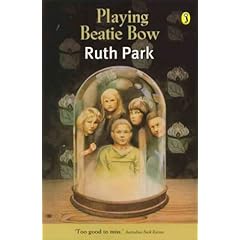
Ruth Park, Playing Beatie Bow

I read this book in school, and good thing I did. It really is one of my favourite children's books of all time. I was slightly obsessed with time travel books, and this book is a great example of the genre done well. Unhappy Abigail is intrigued by a game played by some kids in the park called Beatie Bow, and her search (as well as a piece of Victorian lace she has just bought) leads her to travel back to 19th century Sydney. I loved time travel books because it let the reader see very clearly the differences in past and modern life, and the modern narrator's comments were always the same as my own. It let you imagine what you, the reader, would do in the same situation. Abigail discovers new friends, a new life, grows up a bit and learns to appreciate what she has. Sounds simple, but it works.


Kit Pearson, The Daring Game

Okay, so this one isn't too historical, though it is set in the 1960s. I just had to put a Kit Pearson book on this list because she's such a great children's writer, and I loved all her books. This is her first one, and it's a great story about a girl who moves to a boarding school, and gets into some fun/trouble with a game played by her roommates. Pearson also wrote a fabulous time travel book called A Handful of Time, where an unhappy girl accidentally goes back in time to when her mother was young while she's at a family cottage. She's well-known for her Guests of War trilogy about English children who come to Canada to escape the war.

History will always be in the popular imagination, and as long as authors and directors find new ways of bringing it to life, kids will gain an interest in history that might even translate to a life-long hobby or even further study. I find it hard to believe that kids can't get excited about history when it is so prevalent in novels, movies, even video games. It's true that history classes in school can be dry and unimpressive, but hopefully kids can discover the wealth of popular history that is out there, like I, and most likely many of my history grad colleagues, did.

20 February 2009

In which I consider the musee imaginaire

I was listening to one of my favourite podcasts, from the National Gallery (UK), when an interesting concept was discussed, that of Andre Malraux's musee imaginaire.

Sophie Howeth, director of the English School of Life, describes the idea as a "museum without walls". Malraux's original idea had to do with the ever increasing number of art reproductions available in the 20th (and now 21st) centuries, and art's subsequent ability to reach out beyond hallowed halls to influence everyone and everyday life. The National Gallery used this idea to answer the age-old question: how is culture (Shakespeare, Caravaggio, Stravinsky) revelant to us now? Or, as asked by high school students everywhere: What's the point?

Sophie Howeth's answer, luckily for us public historians, is a resounding affirmation of the importance of culture, even in our daily lives. She explains that while visiting a gallery, for instance, we aren't blank slates. Our families, our jobs, whatever happened in our day - we are still carrying these things around with us. When we leave the gallery, we want to take a piece of it, a part of that sanctuary, back with us.

We all have a musee imaginaire in our heads, or we bring it to life with scrapbooks, or postcards on the fridge, or even blogs. It is our way of collecting those pieces of art, or music, or writing, that really inspire us, mean something to us, and speak to us on a different level. Whether we realize it or not, we all have this going on in our heads - we've all got our own museum without walls.

So how do we engage with this personal cultural collection? In the same way we usually feel a personal connection with a piece of art - when it is working on answering the same questions we are asking. Howeth explains how we turn to art when we feel the need to know someone else is battling with the same important, enduring questions we are - art can help solve the universal feeling of not being alone. Artists put into words, music, paint strokes, whatever, the different emotions we feel.

I felt this podcast was quite timely, as one of the big museum news stories in the past few weeks was the closing of the Rose Art Gallery at Brandeis University in Massachusetts. The university trustees' decision to sell the collection to pay for school administrative costs had art museum directors raising their voices in anger. Art collections shouldn't be seen as expendable income, they should be held in the public trust for educative purposes, not sold in our failing economy to pay for the university's deficit. Not to mention that selling collections goes against the code of ethics of most museum organizations unless the proper deaccessioning rules are followed and the money is put back into the collection.

So this question, of the relevance and societal importance of culture, is increasingly being asked and pondered over, especially in our current economic climate. I have a feeling that Brandeis university is not the only institution battling financial problems, and starting to see their art or artifact collections as assets, instead of a rich cultural collection with the ability to teach and inspire. Unfortunately culture, heritage and the arts is often forgotten in budgets, or the first to be cut out of them.

Maybe we should all sit back and think about our own musee imaginaires, stroll through an art gallery, pick up that classic book we've always meant to read, or go walk through a new museum, and remember the role culture can play in our personal lives.

31 January 2009

Smithsonian 2.0

It's safe to say the internet has been around for awhile. It seems almost cliche to talk about how revolutionary this tool has been, how it has changed lives, the world. I have had an internet connection in my home(s) for the past 13 years. There are teenagers who probably don't legitimately remember a time without e-mail, MSN Messenger and illegal downloading. MySpace is old news, Facebook is getting tired, the New York Times is almost bankrupt. Internet behaviour has already changed - welcome to Web 2.0. Or are we onto something new already? Either way, the internet is hardly new, and our world has been adapting for quite some time.

So why did I feel like I had jumped back in time while reading the Washington Post's Jan 26th article, Smithsonian Clicks-n-Drags Itself Forward? Great quotes like Smithsonian Secretary G. Wayne Clough's "With digitization and with the Web, we can see it all. We can see it all!" almost made me laugh out loud. Maybe museums do deserve the stodgy, old, static reputation they have earned over the years. It's almost sad that it took the revered institution this long to realize the power the web can have. The Smithsonian holds 137 million artifacts (and yes, you read that correctly). As with most museums, only about 1 % are on display, and that's only in the D.C, area. Fortunately, they are now realizing the great role the internet can play in reaching a wide audience, of all classes, in all cities.

The good news is that because it's the Smithsonian, they can afford to get the best. At a recent VIP weekend, Wired's Chris Anderson (he of the Long Tail) gave a talk - where he proclaimed that curators needed to "get over themselves." He argues that the Web has made them obsolete. He argues that the best curators are the people out in the Web who are passionate about their specialized hobbies. If the Smithsonian put their objects on the web, they could put out a call to attract these people - a theory that is very similar to Jeff Howe's Crowdsourcing. "There aren't enough of you", he argues, and I can only imagine the reaction among the curators in the audience.

The main message was that the Smithsonian had to join the 21st century, as much as this task may boggle the mind. I can't even imagine the day when the world's largest museum complex will get even one million objects digitized and available to the public. But they have reached the first step - the recognition of the internet's power as a public resource - and hopefully they'll be well on their way to keeping museums relevant into the next century.

17 January 2009

In which I look at a museum blog

Eric Espig, one of the creators of F Blog, had sent out an e-mail on a Museum listserv asking for comments on his work. He and his partner, both museum studies graduates, were organizing an exhibit called Cold War Berlin: Life at the Breaking Point for the Diefenbunker in Ottawa, to open May 2009. And they are documenting the entire installation.

The first question is, why? Why go to all the trouble to create a blog and post about the everyday issues that come up while installing a museum exhibit? My first thought would be that they were first and foremost posting this information for themselves, as a keepsake of a large project they had put months of work into - maybe their first large self-designed exhibit. Reading through the posts, however, makes it clear that this blog contains great advice on the practicalities of physically transforming a space into an historical exhibit. It shows the background work that most visitors don't even think about. It shows that those wanting to work in museums must have a lot of extra knowledge, and special skills, that they may not have thought about before.

Did you know that most masking tape will only stay sticky for 7-8 days? Or that you should use a low V.O.C. acrylic paint in a museum environment? These two bloggers let the public know the best tips to create a maquette, how to write a curatorial essay, and where to get cheap exhibit cases (and what tools you'll need to disassemble them). They show how they created their title panel in Photoshop, how they changed their design for maximum visitor flow and how they created stencils for the walls.

Blogs like this can showcase one's skill and even passion in creating something for the public. Comments from blog visitors could add different ideas and advice to the new museum worker. And of course, all publicity is good publicity. The power of the internet has proven itself once again, and thankfully young museum fanatics are taking full advantage.

In which I share some news

An interesting article was brought to my attention through a Dan Cohen blog post the other day, though the story itself is from December 2008.

It is easy to forget that not every country, or government at least, is thrilled when new historical projects are dreamt up. In Russia, a human rights group called Memorial had been creating a digital repository concerning Stalin's reign of Terror. They had been collecting photographs of gulags, oral histories, artifacts and had been planning a 'Virtual Museum of the Gulag'. Unfortunately, masked men raided their office in broad daylight and stole over 20 years worth of work.

Memorial had been attempting to collect information from many small Russian museums, almost 300 of them, and wanted to help disseminate their important historical message in a more national way. No wonder scholars were outraged when they heard that the government was trying to stop their research.

Stalin is still a very controversial topic on Russia, and this story really raises awareness of how powerful even a virtual museum, or any type of information repository, can be seen as messengers of history. Museums are the key to public memory, and it's almost unbelievable that such a direct action would be taken to stop Memorial's work with Russia's non-elite population.

Read the original story from the Times UK.

05 January 2009

In which I consider audiences

I was in Washington, D.C. for part of my Christmas vacation and, as usual, visits to the Smithsonian museums were our chosen activity. Washington excels at featuring interesting, important (and FREE!) museums set in beautiful, public spaces - I would suggest a visit to anyone interested. My father and I first visited the National Portrait Gallery, which we hadn't visited before. One large permanent exhibit they have is America's Presidents, and as we wandered, the text panel for a portrait of George Washington caught my eye:

"As the general who led us to victory in the American Revolution and as our first president, George Washington was often painted and sculpted. Everyone, it seemed, wanted the hero's portrait. But it is this portrait that stands for all time as the image that best represents what Washington meant to us when we were a new nation and continues to mean to us in the twenty-first century... This was the man who told us what this new kind of leader-an elected president-could be and whose maturity and resolve gave us confidence in our future. " [from the NPG website] There was also extensive use of 'we' - "We can see.." "We can say.." "We are lucky..."

I pointed this out to my father, who retorted, "Well, what do you expect? It's the US. Of course they're self-centred."

But it began to bug me. I couldn't remember being in a museum or gallery where the text panel used such familiar language, where it assumed that the person reading it would not only be American but would believe in such glowing praise of one historical figure - and in such poetic language! It really got me thinking - should text panels contain an omniscient, third person narrative or speak to an intended audience? How does a visitor, or tourist, relate then to the historical information when it is presented so one-dimensionally? Who decides who this intended audience should be?

A city like Washington, D.C. is visited by many non-American tourists - such as myself - and despite the fact I was in a National Gallery in the national capital, I was still surprised that the writers would focus solely on a receptive, national audience. I am not naive enough to believe that a text panel can ever be truly opinion-free - there is historical interpretation at all levels - but should it speak so personally, instead of trying to give facts? The website claims that "this exhibition lies at the heart of the Portrait Gallery’s mission to tell the American story through the individuals who have shaped it." But tell the story to whom?

In contrast, we also visited the National Museum of the American Indian, whose website states its goals : "To protect and foster their cultures by reaffirming traditions and beliefs, encouraging contemporary artistic expression, and empowering the Indian voice." The intended audience, for the most part, seemed to be non-Native people. Being a large, national institution situated in downtown Washington, this doesn't seem surprising. Even the website statement says "their cultures", showing that many of the people (not all, of course) behind the project were non-Native. Is this just because Native populations are in the minority? In that case, is the Portrait Gallery correct in writing with a majority audience in mind? What about the rest of us?

Do different museums have different audiences? To me, museums seem like one of the largest tourist draws in large cities, so narrowing to an intended audience seems detrimental. Even if a certain gallery has a narrow focus, such as American Presidents, is it right to lose the third-person, impersonal narrative that academic historians thrive on? Does it lose credibility? Or is it just a product of public history, trying to personally and emotionally interact with visitors and perhaps pluck a heartstring or two? But isn't part of public history gaining the interest of a wide audience, no matter the subject?

I am aware that many museums do have in mind the goal of educating a certain audience, for example when Native populations use the money gained from casinos on their land to finance an educational museum, mostly for their own people. Various national museums come to mind as well, which is why I was not surprised the National Portrait Gallery would be so glowing in their text panels re: important American figures. I believe, however, that the best way to portray their historical information would be in a less personal manner so as to include all possible audiences. Museums are there to educate as many as possible, not to make people feel excluded because they are not part of that group, nation, etc. I feel non-Americans looking for a more in-depth, more scholarly, and less personal history will be disappointed.